


As the custom furniture industry continues to evolve, furniture manufacturers are shifting their priorities regarding processing equipment; the focus is moving beyond a mere pursuit of speed toward a comprehensive evaluation of machining precision, operational flexibility, production stability, and return on investment. For small-to-medium-sized furniture factories, custom processing workshops, and enterprises requiring flexible production scheduling, compact, user-friendly, and stable small-scale edgebanders are emerging as a compelling choice.
Against this backdrop, small-scale edgebanders equipped with servo control technology offer a more flexible solution for panel furniture processing.
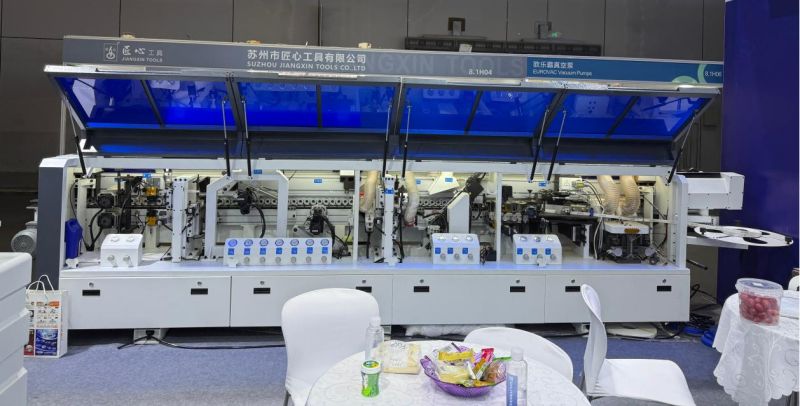

Servo control technology enhances the operational precision of the equipment.
Servo systems can adjust the position, speed, or torque of a motor in response to control commands, with specific control functions determined by the equipment’s mechanical structure and electrical configuration. In edge-banding operations, the effective application of servo technology helps enhance control precision and operational consistency.
When integrated with specific equipment configurations, servo control can be applied to processing stages requiring precise positioning or speed regulation, enabling the equipment to better accommodate varying panel specifications and processing requirements.
For furniture manufacturers striving for consistent processing quality, precise motion control not only impacts equipment performance but also helps optimize repeatability and operational efficiency during production.
Compact design to meet flexible production needs
The advantages of small-scale edge banding machines lie not only in their physical dimensions but also in their adaptability to various production spaces and processing environments.
For enterprises with limited factory space, fluctuating production batch sizes, or a need to supplement existing edge banding capabilities, compact equipment offers greater flexibility in workshop layout. Depending on the specific configuration, these machines can be used for edge banding applications involving custom furniture, kitchen cabinets, wardrobes, office furniture, and other types of panel furniture.
When selecting equipment, enterprises can choose a model that best suits their production requirements by considering factors such as panel thickness, edge banding specifications, processing speed, edge banding techniques, and daily output.
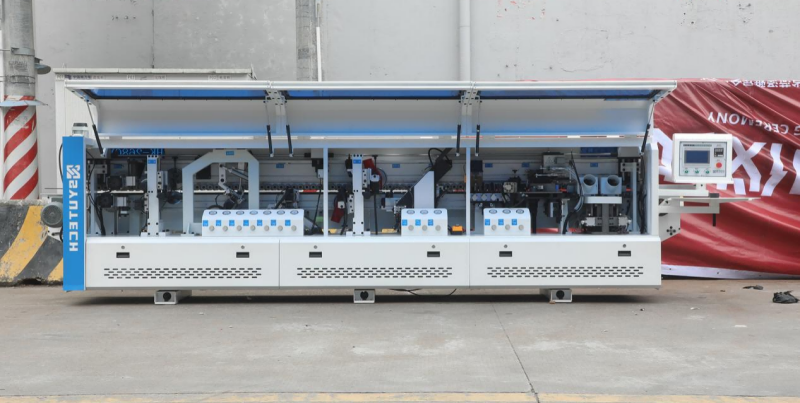
Precision Edge Banding: Prioritizing Processing Quality and Process Stability
Edge banding quality is a crucial factor influencing the appearance of panel furniture. The bond between the edge banding and the panel, the flatness of the edge, and the quality of the surface finish all impact the visual appeal of the final product.
Achieving consistent edge banding results requires not only appropriate equipment configuration but also the adjustment of process parameters based on the material properties of the panels and edge banding strips, alongside diligent equipment cleaning, routine maintenance, and the inspection of wear-prone components.
Combining suitable servo control solutions with proven edge banding processes helps ensure stable processing performance during actual production, meeting the exacting standards furniture manufacturers set for product details.
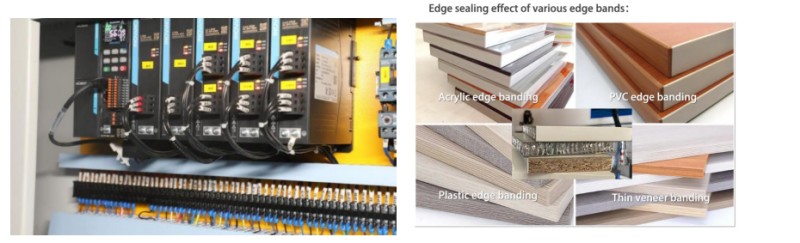
Saiyu Technology specializes in woodworking machinery and panel furniture processing equipment, focusing on customer needs regarding machining precision, equipment stability, and space utilization in actual production. Through optimized equipment configuration and process matching, we are committed to providing practical processing solutions for furniture manufacturers of all sizes.
Looking ahead, as furniture processing evolves toward greater precision and flexibility, edge-banding equipment that combines compact design with servo control will offer expanded options for enterprises seeking agile production and consistent quality.
Post time: Oct-15-2026